Devlog 2: Alpha Phase
The Alpha phase of production consisted of getting all of the main playable elements into the game and functioning in some capacity. This included a lot of rough draft, first pass art, level design, and narrative moments that will get refined later, but we made sure that a player could interact with each main beat of the game and the gameplay was functional enough to start communicating our transformation. My responsibilities for this part of the project included writing and implementation of narrative elements, playtesting, and sourcing placeholder audio.
Narrative
Beginning in the first week of the Alpha phase of development, I wrote some of the most dialogue-heavy scenes in our game. In these scenes, our main memory character Jessica goes on a series of dates with her partner, Lee. While the more involved gameplay in other scenes demonstrates the effects of addiction on Jessica’s everyday activities, her interactions with Lee most drastically show the changes in her personality. A challenge of writing these scenes was showing how addiction can harm relationships even under the best circumstances, without reinforcing any stereotypes about Jessica or showing stigma against drug use from Lee. To make sure that the impact of their relationship ending was clear without making it feel cruel, I valued the input of other team members while writing to make sure that these characters conveyed the story we wanted them to.
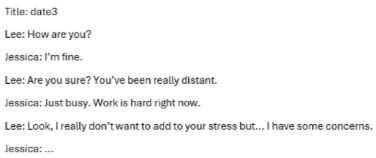
Sample of new relationship dialogue.
While writing in the first week of this phase of production, I made sure to follow the formatting used in YarnSpinner for creating Yarn Scripts so I could quickly implement the dialogue into the date scenes in Unity. In week 2 of this phase I added the dialogue in-engine, creating a new scene for each date to allow for a smooth transition between them and the other scenes in the game.
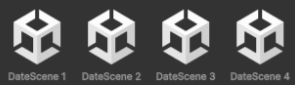
A separate Unity scene for each date.
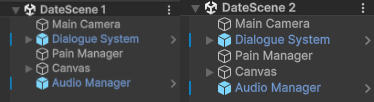
The date scenes have the same components, but they run different dialogue scripts.
Playtesting
During this phase, we did both internal and external playtesting to find pain points and make the game as functional as possible before our final Alpha playtests. Within the team, we looked at the use of visual effects to convey chronic pain, as well as the functionality of the project as a whole at the beginning of Week 3. I contributed to the decision-making process for what needed to be done during week 3 based on our previous playtest results. During this team discussion, we determined that our largest pain points were in the clarity of the office minigame (players sometimes had trouble identifying where to go at first) and the knitting minigame (the lack of knitting visuals and progress feedback made it confusing and vague). These were the issues we tackled first with our remaining time, to which I contributed sound design as feedback for the player.
Audio
I began working on audio for the game in Week 2 of the Alpha phase. I began by getting a sense of what we wanted the game to sound like by creating an audio “mood board” with input from the rest of the team. We used a thread in our Discord server to collect links to songs that had elements we liked, and leave notes about what things specifically we wanted to take inspiration from. With this mood board created I could move forward with sourcing audio to use a placeholder, and eventually I will use it to write original music to be implemented in the Beta phase.
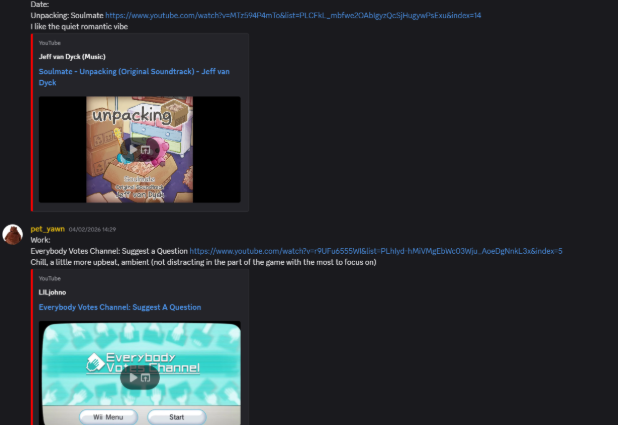
A sample of the audio mood board channel in our Discord server.
During Week 2, I also created an audio asset list. This was a quick way to identify every single sound needed for the game, split up by what part of the game it would be found in. Creating this list also allowed to me get a feel for how many of the sounds could be sourced, and how many would have to be created by the team. I determined that the majority of the sounds could be sourced or created by editing already existing sounds, which means that the team won’t have to record sounds specifically for the game.
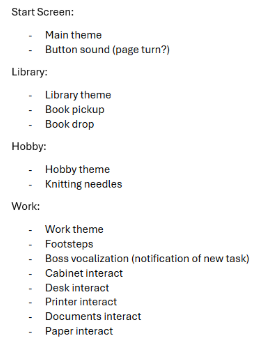
Sample of the sound asset list.
I spent Week 3 of the Alpha phase working on the placeholder audio for our Alpha build. Based on the issues the team identified during testing earlier in the week, I determined that goal of this first pass should be feedback for the player so they could understand the impact of their actions. I sourced, edited, and implemented sounds for interaction with objects in the office minigame, knitting, and removing pills from the package. I also added some sounds for interaction with the UI. And finally, I found some background music that has some of the chill, slightly positive mood to use for now until we have original music to add. I also created a spreadsheet to track sounds with info like the name, original source, and status of the sound. All sound clips are also collected in our team's OneDrive so everyone can access them.
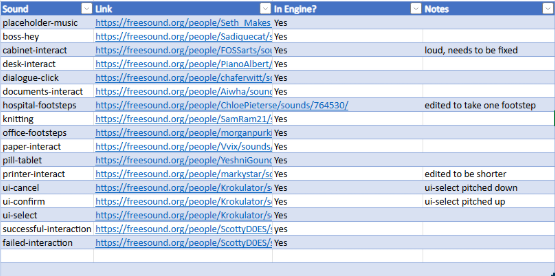
Excel sheet for tracking sounds.
After finding and editing sounds, I added them to our Unity project and dragged them into the corresponding scriptable objects to be used with our audio manager. Adding the sounds this way makes them easy to replace once we have our final sounds and music. I sourced more sounds than have been implemented as of writing this devlog, but these will eventually be added as well. For now, the sounds that are part of the game communicate when a player has interacted with an object and a little more about what that interaction does (for example interacting with the printer triggers the sound of a page printing, and clicking on the knitting needles triggers the sound of them clacking together). This feedback along with additional art and dialogue added by other team members makes interactions in game make more sense, so they contribute to our transformation rather than distracting or confusing the player.

Audio clips imported into the Unity project.

Scriptable objects for each sound.
Over the course of the past three weeks, I have been able to contribute to the project in a few different ways. I’m looking forward to seeing the game come together even more during the Beta phase, as well as testing what we have now to determine our next steps.
Leave a comment
Log in with itch.io to leave a comment.